
Thermopore Beads
Thermocol & Polystyrene Beads
Factory-Direct Pakistan.
Looking for thermopore beads, thermocol beads, polystyrene beads, or styrofoam beads in Pakistan? Whether it is bean bag filling & refilling, EPS manufacturing, lightweight concrete, or cushion stuffing — IK Thermopore supplies multiple grades directly from our Lahore factory. Retail bags and industrial bulk both available with nationwide delivery.
What Are Thermopore Beads? (Thermocol Beads, Polystyrene Beads & Styrofoam Beads Explained)
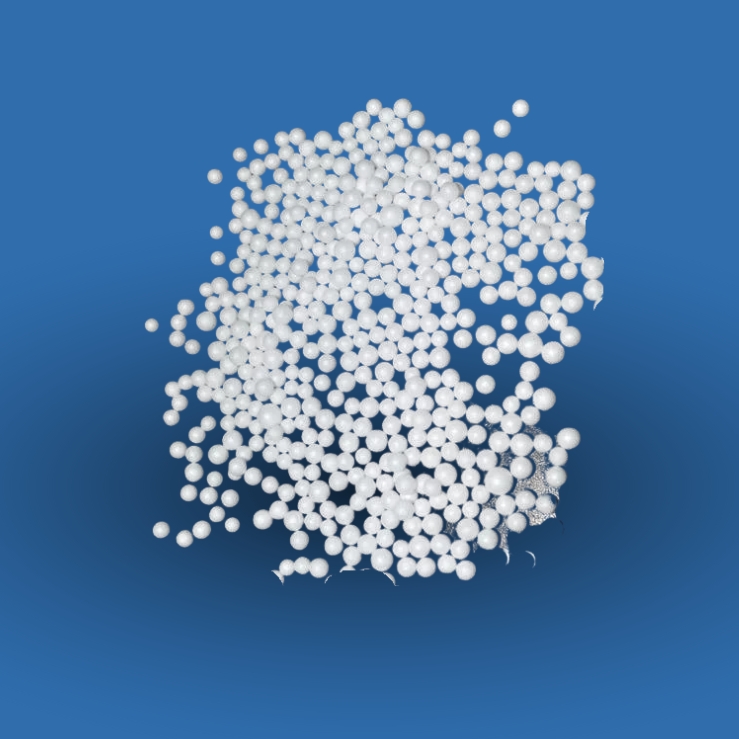
Thermopore beads — also called thermocol beads, EPS beads, polystyrene beads, styrofoam beads, thermopol beads, or thermapole beads in Pakistan — are small spherical granules of Expanded Polystyrene (EPS) material. All these names refer to the exact same product. Whether someone searches for "thermocol beads price per kg" in a local market, "bean bag refill beads" on Daraz, or "EPS pearls" in an industrial catalog — the material is identical. They are the raw form from which almost every EPS product is made.
If you have ever refilled a flat bean bag, you have bought thermopore beads without knowing it by that name. If you have ever seen a construction worker mix white granules into concrete to make it lighter, those were polystyrene beads too. They show up in children's toy stuffing, neck pillows, packaging foam poured around fragile items, and even in soil-loosening applications for gardening. The material is so versatile and inexpensive that once you start looking, you find thermocol beads everywhere in Pakistan.
In Pakistan specifically, demand for thermopore beads comes from three main directions. The furniture industry buys them in bulk for bean bag manufacturing and bean bag refilling — this is the single largest use. The construction sector buys coarser grades for EPS-concrete (thermocol concrete) roof screeds and cavity wall insulation. And EPS manufacturers themselves buy industrial-grade styrofoam beads as raw material to produce sheets, blocks, and custom-molded packaging. IK Thermopore serves all three markets from our Lahore factory, with factory-direct pricing that eliminates distributor markup.
Important clarification: Thermopore beads (small granules, 1–6mm) and thermopore balls (larger finished spheres, 5mm to 30cm+) are two different products. Beads are the raw filling material. Balls are finished decorative spheres. Bean bag filling or construction aggregate → beads. Decorative spheres → balls.
Four EPS Bead Grades — Which Thermocol Bead Size Is Right for You?
EPS beads differ in two ways: size (diameter) and expansion level. Whether you need fine thermopore beads for premium bean bags or coarse polystyrene beads for EPS concrete — here is a practical breakdown of every grade we manufacture.
The smallest thermocol bead size — used for premium bean bags, micro-bead pillows, and neck pillows where a smooth, silky texture is required. The tight packing of fine beads creates a denser, more uniform feel. Also used in high-end EPS molding where a smooth product surface matters.
The most widely used thermopore bead size across Pakistan. This is the classic bean bag bead — also called bean bag beans — that provides the moldable, comfortable feel everyone recognizes. Also the standard grade for EPS sheet and block manufacturing. If you are buying thermocol beads for a bean bag refill, start here.
Larger polystyrene beads for construction applications. These flow better into wall cavities during cavity wall insulation injection and distribute more evenly in concrete mixes. This is the grade for EPS-concrete (thermocol concrete) in roof screeds and insulating floor fills. Also makes cleaner packaging void fill.
Less-expanded styrofoam beads for manufacturing heavy EPS products at 20–30 kg/m³ density. Used by EPS factories producing cold storage panels, structural formwork, and industrial-grade insulation boards. This grade is typically purchased by manufacturing operations, not end consumers.
Not sure which grade fits your project? Call +92 328 8304 655 — describe what you need the thermocol beads for, and we will recommend the right grade and quantity. No guesswork, no wasted money.
Six Ways Thermocol Beads & Polystyrene Beads Are Used in Pakistan
Most people only know thermopore beads as bean bag filling. The full picture is much broader — understanding all six applications helps you choose the right grade of thermocol beads and buy the right quantity.
1. Bean Bag Filling & Refilling (Most Popular)
The largest single use for thermopore beads in Pakistan. Every bean bag chair — whether bought from Daraz, a furniture store, or custom made — is filled with EPS micro-beads (also called bean bag beans or EPS pearls). The millions of tiny air-filled thermocol beads shift and mold to your body, providing that distinctive comfortable feel.
What most people do not realize is that bean bags do not need to be replaced when they go flat. They just need a bean bag refill. Adding 50–100 litres of fresh polystyrene beads to a flat bean bag restores it to its original shape at a fraction of a new one's cost. IK Thermopore supplies both bulk quantities for bean bag manufacturers and smaller refill packets for homeowners.
2. EPS Sheet & Block Manufacturing
Every thermopore sheet or block you have ever seen started as loose EPS beads. In the manufacturing process, pre-expanded styrofoam beads are loaded into molds and exposed to steam under pressure. The heat causes the thermocol beads to soften and fuse together, forming a solid EPS shape. Density, surface quality, and dimensional accuracy all trace back to the bead quality.
This is why EPS manufacturers in Pakistan are particular about bead grade consistency. Inconsistent bead sizes produce uneven density in finished products. IK Thermopore supplies manufacturing-grade polystyrene beads with tight size tolerances so every production run performs predictably.
3. Lightweight Concrete (EPS-Concrete / Thermocol Concrete)
This application surprises most people, and it is increasingly common in Pakistani construction. When coarse polystyrene beads are mixed into a Portland cement mix with water, the result is EPS-concrete — sometimes called thermocol concrete or lite-concrete locally. A standard mix ratio is approximately 1 part cement to 4–6 parts EPS beads by volume.
The EPS-concrete produced is 40–70% lighter than standard concrete, while achieving adequate strength for non-structural uses. In Pakistan it is most commonly used for roof screed — the final leveling and insulating layer over flat RCC roofs before waterproofing. Construction companies in Lahore and Karachi increasingly specify EPS-concrete roof screed as a cost-effective combined leveling and insulation solution.
4. Cavity Wall Insulation (Retrofit)
Many commercial buildings in Pakistan have cavity walls — double-brick walls with an air gap. That air gap does not actually insulate well due to convection. Filling the cavity with coarse-grade thermopore beads stops this convection and provides genuine thermal insulation.
The process involves drilling small holes through the outer wall, injecting polystyrene beads using a pumping machine until the cavity is full, then sealing the holes. No demolition, no major disruption. For property owners reducing cooling costs without major renovation, this is practical and cost-effective. Coarse-grade thermocol beads (4–6mm) flow and pack best for this application.
5. Cushions, Pillows & Stuffed Products
Fine-grade EPS beads (1–2mm) — sometimes marketed as EPS pearls — are the filling of choice for travel pillows, neck support pillows, orthopaedic cushions, and decorative throw pillows. The thermocol beads do not absorb moisture, do not develop mold, and maintain their feel in Pakistan's humid climate far better than polyester fiberfill.
Stuffed toy manufacturers also use styrofoam beads — particularly for larger plush toys where weight savings over polyester fill is meaningful, and where the self-shaping property gives the toy a more natural, fluid feel when handled by children.
6. Packaging Void Fill
Standard thermopore beads poured loosely around products inside shipping boxes create a cushioning layer that prevents movement during transit and absorbs drop impacts. EPS void fill is lighter than shredded paper, cheaper than bubble wrap at scale, moisture-resistant, and provides full 360-degree surrounding protection.
For export businesses particularly, the weight saving from polystyrene bead void fill versus paper or bubble wrap directly reduces freight cost — on air cargo where every kilogram is charged, this difference accumulates meaningfully over monthly shipping volumes.
How Much Thermocol Bead Filling Does Your Bean Bag Actually Need?
The most common question from homeowners buying bean bag refill beads. Use this table to find the right volume of thermopore beads — and remember that refilling does not require the full amount:
| Bean Bag Type | New Fill (Litres) | Refill Only (Litres) | Approx Weight (kg) |
|---|---|---|---|
| Small Kids' Bean Bag (under 8 yrs) | 80–120 L | 30–50 L | 0.8–1.2 kg |
| Teen / Regular Chair (1 person) | 150–200 L | 50–80 L | 1.5–2 kg |
| Adult XL Lounger | 200–300 L | 80–120 L | 2–3 kg |
| Bean Bag Sofa (2 person) | 350–450 L | 120–180 L | 3.5–4.5 kg |
| Large Bean Bag Sofa (3 person) | 500–700 L | 180–280 L | 5–7 kg |
Bean bag refill tip: Most people ordering bean bag refill beads assume the full original volume is required. It usually is not. The existing thermocol beads are still there — just compressed. Start with 50–80 litres of fresh polystyrene beads and assess before ordering more. Call us with your bag dimensions for exact calculation.
How to Refill a Bean Bag Chair with Thermocol Beads at Home
EPS beads are extremely light and will float at the slightest breeze. A few precautions make the bean bag refilling process clean, quick, and frustration-free:
Close All Windows and Fans
EPS thermocol beads are so light that even a gentle indoor breeze sends thousands drifting across the room. Close every window, turn off every fan and AC, and close the door. Work in completely still air.
Work Inside a Bathtub or Large Tub
A bathtub contains any spilled polystyrene beads perfectly. If unavailable, lay a bedsheet on the floor around the bag to catch spillage. This makes cleanup much easier.
Get a Second Person to Help
One person holds the bag opening wide, the other pours the bean bag refill beads slowly. Trying to fill alone is how most spills happen.
Pour Slowly and Shake Regularly
Cut a small corner off the thermopore bead packet to create a narrow funnel opening. Pour gradually, shaking the bag every few seconds to settle the thermocol beads evenly throughout.
Do Not Overfill — 70-80% Capacity
An overfilled bean bag becomes rigid and loses the flexible shifting feel. Fill to 70–80% capacity, then sit in it to check. Add or remove styrofoam beads as needed for your comfort.
Clean Up Spilled Beads Immediately
Static electricity makes spilled EPS beads cling to everything. A damp cloth picks them up quickly. Do not vacuum dry — dampen a cloth or sponge slightly to collect stray polystyrene beads.
Need Help Calculating Quantity?
Tell us your bean bag size and type. We calculate exactly how many thermocol beads you need — no guessing, no wasted orders.
📞 +92 328 8304 655 info@ikthermopore.comHow to Make EPS-Concrete (Thermocol Concrete) Using Polystyrene Beads
EPS-concrete — also called thermocol concrete or lite-concrete in Pakistan — is a growing construction technique for roof screeds and insulating fills. Here is a practical mixing guide using coarse-grade thermopore beads:
Choose Coarse Grade Thermocol Beads (4–6mm)
Fine or standard grades are too small for concrete. Coarse polystyrene beads distribute evenly in the cement matrix and create better aggregate structure in the finished EPS-concrete.
Standard Mix Ratio for Roof Screed
Common Pakistani roof screed mix: 1 bag cement (50kg) : 5–6 cubic feet of EPS beads : sufficient water for workability. Produces concrete approximately 400–600 kg/m³ density vs 2,400 kg/m³ for standard concrete — significantly reducing dead load on the roof structure.
Mixing Method
Add water to the mixer first. Then add cement and mix briefly. Add thermopore beads last — they are extremely light and float if added before the cement slurry. Mix 3–4 minutes until polystyrene beads are evenly coated and distributed.
Application & Curing
Pour onto the prepared roof surface and screed to required level. Keep the surface moist for at least 3 days during curing. Once cured, apply waterproofing membrane. Compressive strength typically 1–3 MPa — adequate for roof screed but not structural loads.
Important: EPS-concrete (thermocol concrete) is non-structural. Do not use for load-bearing columns, beams, or slabs. Suitable for roof screed, insulating fill layers, and void filling only.
Need Coarse Grade Beads for Construction?
We supply coarse thermocol beads for EPS-concrete and cavity wall insulation. Call for bulk pricing and site delivery.
📞 +92 328 8304 655 info@ikthermopore.comThermopore Beads vs Thermopore Balls — A Clear Comparison
The most common confusion among buyers of thermocol products. Here is a straightforward comparison so you order exactly the right product:
| Feature | Thermopore Beads (Thermocol Beads) | Thermopore Balls (Thermocol Balls) |
|---|---|---|
| Size Range | 1–6mm (tiny granules) | 5mm – 30cm+ (spheres) |
| Product Form | Raw granular material | Finished spherical products |
| Bean Bag Filling | Yes — standard choice | Only micro-bead type (1–3mm) |
| Event Decoration | Not suitable | Yes — primary use |
| EPS Manufacturing | Yes — essential raw material | No |
| EPS-Concrete | Yes — coarse grade | No |
| Cavity Wall Fill | Yes — coarse grade | No |
| School Craft Projects | Too small individually | Yes — small/medium sizes |
| Sold By | Weight (per kg) | Weight (kg) or per piece |
| Price Range (PKR) | 250–500/kg retail | Varies by size |
Simple rule: Bean bag refill, construction, cushion stuffing → order thermopore beads. Decoration, craft projects, stage props → order thermopore balls.
Virgin EPS Thermocol Beads vs Recycled Polystyrene Beads — Why It Matters
Not all thermopore beads in Pakistan are the same quality. The biggest difference is whether the EPS is virgin or recycled — this directly affects bean bag comfort, manufacturing consistency, and product lifespan.
100% Virgin EPS Beads
- Made from new, unprocessed polystyrene raw material
- Uniform, consistent bead size in every batch
- Retains shape and bounce for 2–3x longer
- Clean, white, odorless — no chemical smell
- Bean bags stay plump and comfortable much longer
- Safe for children's products and food packaging
- Preferred by furniture manufacturers and pillow makers
Recycled / Reprocessed Beads
- Made from crushed old thermocol waste, reprocessed
- Irregular sizes — some big, some broken, some clumped
- Compresses and goes flat within weeks
- Often yellowish color with chemical odor
- Bean bags lose shape quickly, need frequent refilling
- May contain contaminants from previous use
- Lower upfront price but higher long-term cost
Bottom line: Recycled thermocol beads cost less per kg upfront, but you will refill your bean bag 3–4x more often. With IK Thermopore's virgin EPS polystyrene beads, you save money long-term and get consistent quality every time.
Six Reasons Buyers Choose IK Thermopore for Thermocol Beads
Quality differences in thermopore beads are real. Here is what distinguishes our polystyrene beads and styrofoam beads from cheaper alternatives in the market.
100% Virgin EPS — Not Recycled
Virgin EPS thermocol beads maintain consistent expansion, density, and performance. We use virgin material only — which is why our bean bag beads hold their comfort longer and our manufacturing-grade polystyrene beads produce predictable finished product density.
Tight Size Tolerances Per Grade
Each thermopore bead grade is screened to a specific size range. You order 2–4mm standard grade, you get 2–4mm — not a mix of sizes that produces uneven texture in bean bags and inconsistent density in manufactured products.
Non-Toxic, Safe for All Applications
EPS thermocol beads are chemically inert, odorless, and do not off-gas. Safe for children's toys, bean bags, and food-adjacent cushions. The same material is used inside food packaging and pharmaceutical boxes worldwide.
Moisture Resistant Year-Round
Polystyrene beads do not absorb water. In Pakistan's humid coastal cities and monsoon months, this keeps bean bag filling dry, hygienic, and light. Polyester fiberfill becomes heavy and musty when damp — EPS beads stay exactly the same.
Factory-Direct — No Middleman Cost
We manufacture our own thermopore beads. Every buyer between a factory and end consumer adds their margin. Buying directly from us cuts all of that out. For bulk buyers, this difference is significant monthly.
Retail & Bulk — No Minimum Barrier
A homeowner needing 2kg of bean bag refill beads and a factory needing 500kg monthly both get served. Retail bags (1kg, 2kg, 5kg) and industrial bulk (25kg, 50kg, 100kg, 500kg+) — same virgin quality, same factory source.
What Customers Say About IK Thermopore Beads
Real feedback from buyers who have ordered thermocol beads and polystyrene beads from our Lahore factory.
Bean bag manufacturer hun. Pehle recycled thermocol beads use karte the — 2-3 hafte mein flat ho jate the aur customer complaints aati theen. IK Thermopore ke virgin EPS beads se ab complaints almost zero ho gayi hain. Quality consistent hai har batch mein.
Construction company ke liye coarse grade thermopore beads order kiye the roof screed ke liye. 200kg delivery 2 din mein Lahore site pe aa gayi. EPS-concrete ka result bohat acha tha — halka aur insulation bhi achi. Will order again for next project.
Ghar ka bean bag flat ho gaya tha. Online bohat search kiya "bean bag refill beads" — IK Thermopore ka page mila. Call kiya, unhone 3kg suggest kiya. Karachi mein 4 din mein deliver ho gaya. Refill karke bean bag naya ho gaya. Very happy.
EPS sheet manufacturing ke liye standard grade polystyrene beads IK Thermopore se lete hain. Bead size consistent hoti hai — hamare sheets ka surface finish acha aata hai. Delivery Faisalabad mein kabhi kabhi 1 din late hoti hai but quality pe koi compromise nahi.
Industries That Buy Thermocol Beads & Polystyrene Beads in Pakistan
From bean bag refill buyers to large construction companies — our thermopore beads serve buyers across every scale in Pakistan.
Thermocol Beads Price in Pakistan — Thermopore Beads Factory-Direct
Thermopore beads, thermocol beads, and polystyrene beads are sold per kg (retail) or per cubic meter (bulk industrial). Standard grade runs approximately PKR 250–500 per kg at retail quantities. Bulk orders receive factory-direct rates significantly below that.
Retail & Bulk Pricing Tiers: Retail (1–10 kg): standard rates. Bulk (50kg+): significantly better. Industrial bulk (100kg–500kg+): factory floor pricing. Bean bag manufacturers and construction companies get dedicated bulk rates. Lahore dispatch 1–2 days. Major cities 3–5 days.
Frequently Asked Questions About Thermopore Beads & Thermocol Beads
Every important question about thermopore beads, thermocol beads, polystyrene beads, and bean bag refill beads — answered directly.
Have a Question Not Answered Here?
Call our team — we answer questions about thermopore bead grades, quantity, pricing, and delivery without any sales pressure.
📞 +92 328 8304 655 info@ikthermopore.comMore from IK Thermopore
Ready to Order Thermopore Beads?
Tell us your grade (standard for bean bag refill, coarse for EPS concrete), quantity, and delivery city. We send factory-direct pricing for thermocol beads and polystyrene beads the same business day. Retail bags and industrial bulk both available.